
Turbocharger – what is it and what is it used for?
A turbocharger, commonly known as a turbo, is a device that increases the efficiency and power output of an internal combustion engine by forcing additional compressed air into the combustion chamber. This improvement over the output of a naturally aspirated engine is due to the fact that the compressor can force more air – and proportionately more fuel – into the combustion chamber than atmospheric pressure – in this case, the piston itself.

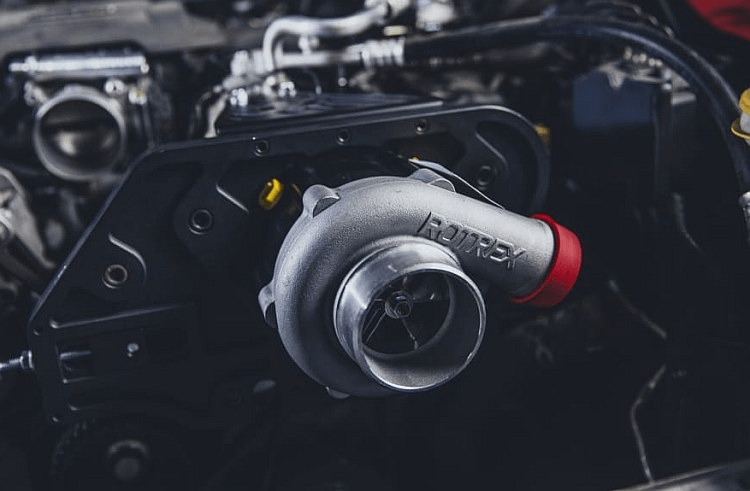
Turbocharger during regeneration, source: https://reparts.pl/blog/turbosprezarka-co-to-jest-i-do-czego-sluzy/[/caption].
How does a turbocharger work?
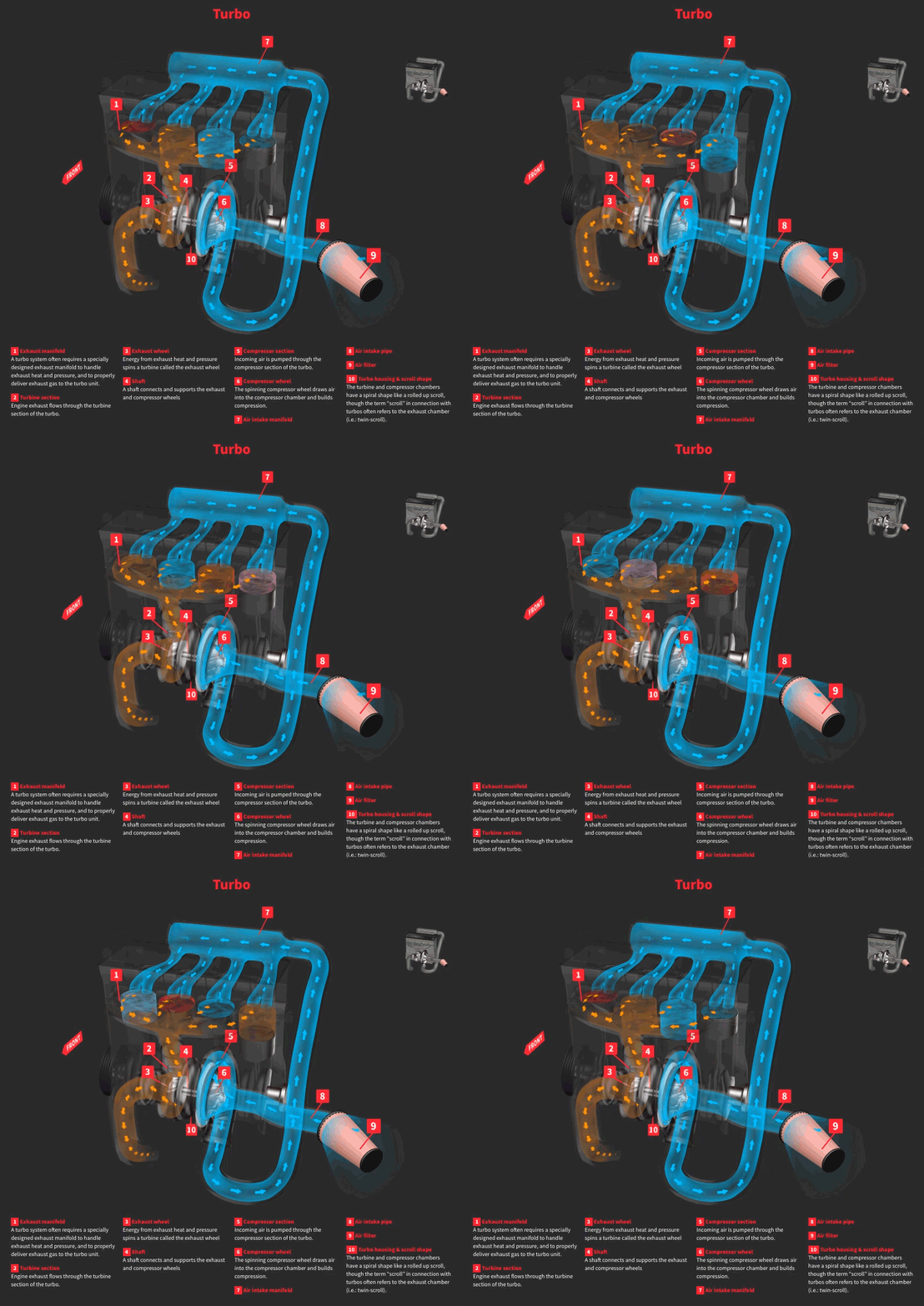
In naturally aspirated piston engines, intake gases are sucked or “pushed” into the engine by atmospheric pressure filling the volume void caused by the piston’s downward stroke (which creates a low-pressure region), much like pulling fluid with a syringe. The actual amount of air inhaled, compared to the theoretical amount if the engine could maintain atmospheric pressure, is called volumetric efficiency . The purpose of a turbocharger is to improve the volumetric efficiency of an engine by increasing the density of the inlet gas (usually air), allowing more power per engine cycle.
The turbocharger’s compressor draws in ambient air and compresses it before entering the intake manifold at increased pressure. This causes a greater mass of air to enter the cylinders with each intake stroke. The power needed to run the centrifugal compressor comes from the kinetic energy of the engine’s exhaust.
History of turbochargers
Forced induction dates back to the late 19th century, when Gottlieb Daimler patented the technique of using a gear pump to force air into an internal combustion engine in 1885. The turbocharger was invented by Swiss engineer Alfred Büchi (1879-1959) , head of diesel engine research at Gebrüder Sulzer, an engine manufacturing company in Winterthur, who received a patent in 1905 for using an exhaust-driven compressor to force air into an internal combustion engine to increase power output but it took another 20 years to realize the idea.
The first use of turbocharging technology based on its design was for large marine engines when the German Ministry of Transport commissioned the “Preussen” and “Hansestadt Danzig” passenger lines in 1923. Both ships were equipped with twin ten-cylinder diesel engines with power increased from 1,750 to 2,500 horsepower thanks to turbochargers designed by Büchi and built under his supervision by Brown Boveri. During World War I, French engineer Auguste Rateau installed turbochargers in Renault engines, which successfully powered various French fighter jets. In 1918. General Electric engineer Sanford Alexander Moss attached a turbocharger to the engine of a V12 Liberty aircraft . The engine was tested at Pikes Peak in Colorado at an altitude of 14,000 feet (4,300 m) to demonstrate that it could eliminate the power losses normally found in internal combustion engines due to reduced air pressure and density at high altitudes.


