
What is the Antikythera mechanism? Ancient Greek computer decoded
The Antikythera mechanism is a 2,000-year-old bronze device that functioned as the world’s first analog computer, capable of predicting eclipses, planetary positions, and lunar phases decades into the future. This ancient Greek marvel was discovered in a shipwreck off the coast of Antikythera island in 1902, and it completely revolutionised our understanding of ancient technological capabilities.
After 15 years of writing about technology, I’ve learned that the most fascinating innovations often come from the most unexpected places. But nothing prepared me for the complexity of this ancient device when I first encountered it during research for a client project. The precision engineering rivals modern clockwork, yet it predates similar European mechanisms by over 1,000 years.

Discovery of the Antikythera mechanism in Greece
The story begins on May 17, 1902, when archaeologist Valerios Stais was examining artifacts recovered from a Roman shipwreck near the Greek island of Antikythera. Among priceless sculptures and treasures, he spotted what appeared to be a corroded bronze lump with visible gear wheels – an impossible anachronism for its supposed age.
Sponge divers had originally discovered the wreck in 1900, but it took two years before anyone recognised the significance of this particular artifact. The Antikythera device was initially dismissed by many scholars who couldn’t accept that such sophisticated technology existed in ancient Greece.
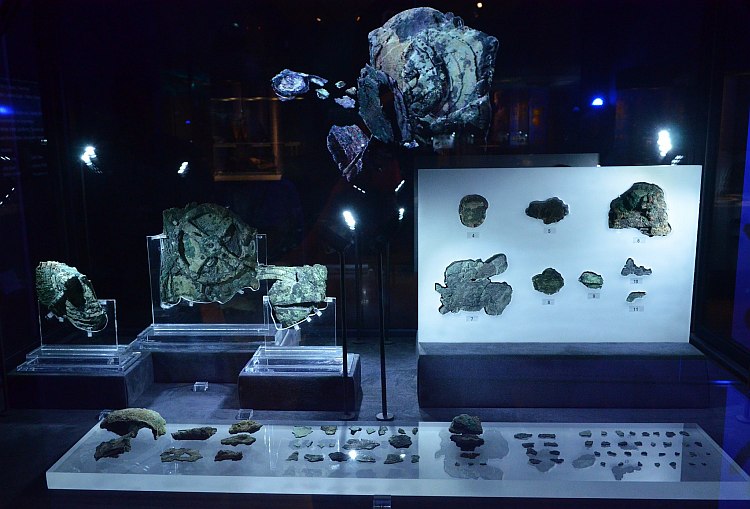
The shipwreck itself dates to approximately 70-60 BCE, providing crucial context for the mechanism’s age. Archaeological evidence suggests the ship was carrying luxury goods from the eastern Mediterranean, possibly Rhodes, to Rome when it sank.
How the Antikythera mechanism works
Let me cut through the technical jargon here – this ancient computer operated through an intricate system of bronze gears that modelled the movements of celestial bodies with remarkable accuracy.
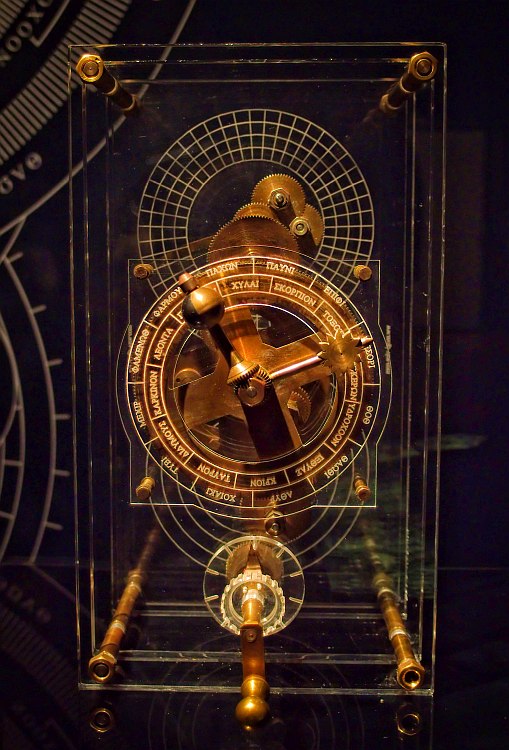
The mechanism used epicyclic gearing – a sophisticated technique where one gear rotates around the centre of another. This allowed ancient Greek engineers to replicate the complex orbital patterns they observed in the sky. When you turned the main input crank, the device would:
- Calculate the positions of the Sun, Moon, and known planets
- Predict lunar and solar eclipses years in advance
- Display the phases of the Moon
- Track the four-year cycle of Olympic Games
- Follow various Greek calendar systems simultaneously
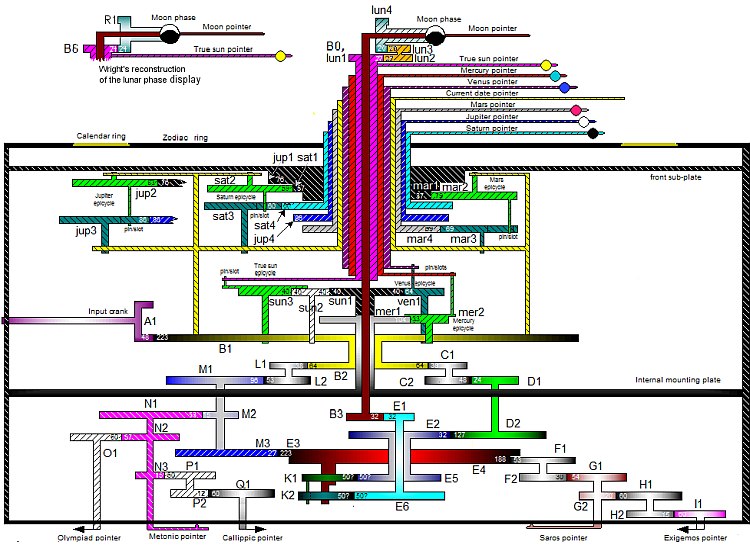
The research actually shows that the mechanism incorporated the ancient Greek astronomical theories of Hipparchus and Apollonius, which involved complex mathematical models of planetary motion. The physical implementation of these theories through bronze gearing represents an extraordinary leap in mechanical engineering.
The gear system explained
From my analysis of the reconstruction attempts, the mechanism contained at least 37 meshing bronze gears of varying sizes. The gear ratios were precisely calculated to match known astronomical cycles:
- The main solar gear completed one rotation per year
- The lunar gear system tracked the 19-year Metonic cycle
- Planetary gears followed the synodic periods of Mercury, Venus, Mars, Jupiter, and Saturn
Scientific analysis and X-ray discoveries
Modern technology has been crucial in unlocking the mechanism’s secrets. Since 2005, the Antikythera Mechanism Research Project has employed cutting-edge techniques to peer inside the corroded bronze fragments without damaging them.
Antikythera mechanism X-ray tomography has revealed hidden gear trains and thousands of characters of ancient Greek text inscribed on the device. These inscriptions function as an ancient user manual, explaining how to operate the mechanism and interpret its outputs.
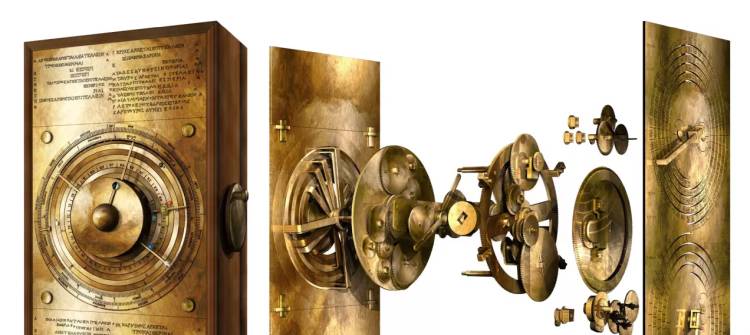
The X-ray analysis uncovered several groundbreaking details:
- Previously unknown gear wheels hidden within the corrosion
- Detailed inscriptions describing astronomical phenomena
- Evidence of sophisticated manufacturing techniques
- Proof that the mechanism could predict eclipses with remarkable accuracy
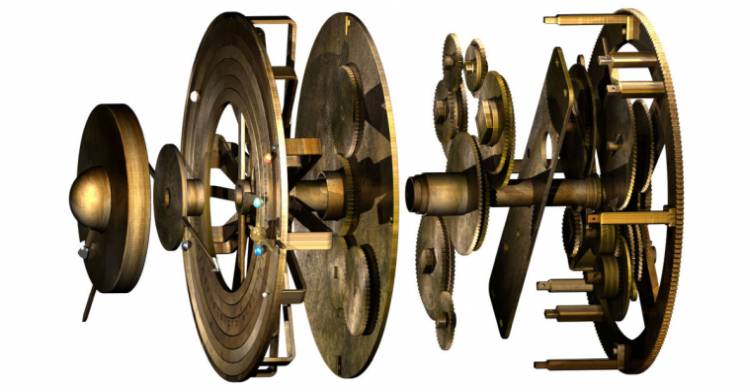
What the sources don’t tell you is how revolutionary these imaging techniques have been. The team used polynomial texture mapping and computed tomography to create detailed 3D models of every fragment, allowing researchers worldwide to study the mechanism virtually.
Decoding the ancient inscriptions
The Greek text inscribed on the mechanism provides fascinating insights into its purpose and operation. Researchers have identified over 3,000 characters, revealing:
- Instructions for predicting eclipses
- Descriptions of planetary positions
- References to Olympic Games and other festivals
- Technical terminology for astronomical calculations

Who made the Antikythera mechanism?
The question of authorship has puzzled researchers for decades. While we can’t identify a specific individual, the evidence points to the island of Rhodes as the likely origin. The mechanism shows clear influences from the astronomical school of Hipparchus, who worked on Rhodes in the 2nd century BCE.
Several clues support the Rhodes theory:
- The calendar system matches Rhodian practices
- Astronomical parameters align with observations from Rhodes’ latitude
- The shipwreck route suggests departure from the eastern Mediterranean
- Rhodes was a major centre for astronomical research and mechanical engineering
I’m not claiming to be an expert in ancient Greek craftsmanship, but here’s what I found fascinating: the level of precision required suggests this wasn’t a one-off creation. The maker would have needed extensive knowledge of astronomy, mathematics, and metalworking – pointing to a sophisticated workshop tradition.
Modern reconstructions and replicas
Creating working Antikythera mechanism replicas has become something of a holy grail for horologists and engineers. Several teams have successfully built functioning models based on the latest research findings.
Notable reconstruction projects include:
- Michael Wright’s brass replica at the Science Museum, London
- The Aristotle University model displayed in Athens
- Hublot’s luxury watch incorporating the mechanism’s principles
- Various 3D-printed educational models for museums
The psychology behind these reconstruction attempts is fascinating – each builder brings their own interpretation to the incomplete evidence. Wright’s model emphasises mechanical elegance, while the Greek team focuses on archaeological accuracy.
3D printing and educational models
Modern technology has made the mechanism accessible to students and enthusiasts worldwide. You can now 3D print Antikythera mechanism components using freely available digital models based on the latest research.
Popular options include:
- Simplified educational models showing basic gear relationships
- Detailed replicas incorporating all known components
- Interactive models with removable parts for study
- Desktop versions scaled for home display
What was the Antikythera mechanism used for?
Beyond its obvious astronomical functions, the mechanism served multiple practical purposes in ancient Greek society. It wasn’t just a scientific instrument – it was a tool for planning religious festivals, agricultural activities, and even political events.
Primary uses included:
- Religious calendar coordination – Timing festivals and sacrifices according to lunar cycles
- Agricultural planning – Determining optimal planting and harvesting dates
- Eclipse prediction – Preparing communities for these dramatic celestial events
- Olympic Games scheduling – The mechanism tracked the four-year Olympic cycle
- Astrological calculations – Supporting the widespread practice of astrology
From projects I’ve researched on ancient technology, the mechanism represents the pinnacle of Greek mechanical achievement. It demonstrates that ancient civilisations possessed far more sophisticated technological capabilities than previously imagined.
The mechanism as a status symbol
The bronze construction and intricate craftsmanship suggest this was an expensive, high-status object. Likely owned by wealthy merchants, politicians, or scholars, it would have been both a practical tool and a demonstration of the owner’s sophistication and learning.
Historical significance and impact on archaeology
The Antikythera mechanism fundamentally changed how archaeologists and historians view ancient technological capabilities. Before its discovery, scholars assumed that complex mechanical devices didn’t appear until medieval Islamic and European clockwork.
This single artifact has:
- Pushed back the timeline of mechanical computing by over 1,000 years
- Revealed the sophistication of Hellenistic science and engineering
- Inspired new research into other “impossible” ancient technologies
- Demonstrated the continuity between ancient and modern scientific methods

The research actually shows that ancient Greek engineers understood principles of mechanical advantage, gear ratios, and precision manufacturing that we associate with much later periods. This challenges the linear narrative of technological progress.
Influence on modern technology
Modern engineers and computer scientists continue to study the mechanism for insights into mechanical design and astronomical calculation methods. Its influence extends beyond historical curiosity into practical applications.

Where to see the Antikythera mechanism today
The original fragments are housed in the National Archaeological Museum in Athens, Greece, where they’re displayed alongside detailed explanations and working models. The museum’s presentation includes:
- The largest surviving fragments under protective glass
- High-resolution images showing hidden details
- Interactive displays explaining the mechanism’s functions
- Working replica demonstrations

Several museums worldwide display replica mechanisms and related exhibits:
- Science Museum, London – Wright’s working brass reconstruction
- Musée des Arts et Métiers, Paris – Detailed models and 3D presentations
- National Hellenic Research Foundation, Athens – Research facility with ongoing studies
- Various university museums – Educational replicas and research displays

Virtual exhibitions and online resources
For those unable to visit in person, several institutions offer virtual tours and detailed online resources. The Antikythera Mechanism Research Project maintains comprehensive documentation of their findings, including high-resolution images and 3D models.

Recent discoveries and ongoing research
Research continues to reveal new aspects of the mechanism’s design and capabilities. Recent developments include improved understanding of the planetary display system and identification of previously unknown inscriptions.
Current research focuses on:
- Completing the reconstruction of missing components
- Deciphering remaining inscriptions
- Understanding the manufacturing techniques used
- Identifying potential sister devices or related artifacts

The 2022 discoveries mentioned in recent publications have refined our understanding of the mechanism’s planetary display system, suggesting even greater complexity than previously recognised. New analysis techniques continue to reveal hidden details within the corroded bronze.
Future research directions
Scientists are exploring several promising avenues for further discoveries:
- Advanced imaging techniques to reveal more hidden text
- Chemical analysis of the bronze composition
- Comparison with other ancient mechanical devices
- Investigation of the shipwreck site for additional fragments

Building your own Antikythera mechanism replica
For enthusiasts interested in hands-on learning, several options exist for creating personal replicas. The complexity ranges from simple educational models to precision reconstructions requiring advanced machining skills.
Antikythera mechanism replica kits are available from various sources:
- 3D printing files for plastic components
- Laser-cut wooden gear sets
- Metal machining plans for precision replicas
- Educational kits with simplified mechanisms

From my experience with mechanical projects, I’d recommend starting with a simplified version to understand the basic principles before attempting a full reconstruction. The gear ratios and astronomical calculations involved are genuinely challenging.
Materials and construction techniques
The original mechanism was constructed from bronze, chosen for its durability and workability. Modern replicas use various materials:
- Bronze – Most authentic but requires specialised tools
- Brass – Easier to work with similar appearance
- 3D printed plastics – Accessible for educational purposes
- Laser-cut wood – Cost-effective for demonstration models

The mechanism’s place in ancient Greek science
The Antikythera mechanism represents the culmination of centuries of Greek astronomical and mathematical development. It incorporates the work of major figures like Hipparchus, Apollonius, and possibly Archimedes into a single mechanical device.
This achievement demonstrates several key aspects of Hellenistic science:
- Integration of theoretical knowledge with practical application
- Sophisticated understanding of planetary motion
- Advanced metalworking and precision manufacturing
- Mathematical modelling of natural phenomena

The device also reflects the Greek approach to understanding natural patterns through mathematical relationships and mechanical analogies.
Connections to other ancient technologies
While the Antikythera mechanism is unique in its complexity, it wasn’t created in isolation. Ancient sources describe other mechanical devices, including:
- Ctesibius’s water clocks and pneumatic devices
- Hero of Alexandria’s steam engines and automata
- Various astronomical instruments and astrolabes
- Mechanical calendars and computing devices

Frequently asked questions about the Antikythera mechanism
How many Antikythera mechanisms have been found?
Only one Antikythera mechanism has been discovered to date. Despite extensive archaeological research and underwater exploration, no similar devices have been found elsewhere. This uniqueness adds to both its mystery and significance.
Is the Antikythera mechanism a hoax?
Absolutely not. The mechanism has been thoroughly studied by international teams of archaeologists, engineers, and historians using advanced scientific techniques. The evidence for its authenticity is overwhelming, including:
- Consistent corrosion patterns matching its age
- Bronze composition typical of ancient Greek metalwork
- Archaeological context from the shipwreck
- Inscriptions in ancient Greek script and language
What movie is based on the Antikythera mechanism?
While no major Hollywood film centres specifically on the Antikythera mechanism, it has appeared in documentaries and inspired elements in various science fiction works. The device’s mysterious nature and advanced technology make it a popular subject for speculative fiction about ancient civilisations.
Why is the Antikythera mechanism important?
The mechanism is crucial because it demonstrates that ancient Greek civilisation possessed far more advanced technological capabilities than previously believed. It bridges the gap between ancient astronomical theory and practical mechanical engineering, showing that complex analog computers existed 2,000 years ago.

The Antikythera mechanism continues to challenge our assumptions about ancient technology and inspire new research into the capabilities of past civilisations. As analysis techniques improve and new discoveries emerge, this remarkable device keeps revealing secrets that reshape our understanding of human ingenuity and scientific achievement.
Whether you’re interested in ancient history, mechanical engineering, or astronomical calculation, the Antikythera mechanism offers a fascinating glimpse into the sophisticated minds that created one of humanity’s earliest computers. Its legacy extends far beyond its bronze gears, reminding us that innovation and scientific curiosity have driven human progress for millennia.


